A one-dish meal succeeds when you match ingredients by cooking speed: par-bake firm vegetables for 10–20 minutes, add meat according to size, and add broccoli, cheese or fresh herbs later. Spread everything in a single layer and check meat doneness with a kitchen thermometer, not just by color.
A one-dish dinner isn’t just a list of ingredients thrown in the oven at once. Potatoes need a different time than broccoli, and a chicken thigh takes longer than a thin slice of meat. By balancing sizes and adding ingredients progressively, you’ll get a finished family dinner without overcooked vegetables, hard potatoes or a pile of dishes.
You can use this method for most combinations of meat, vegetables, and a side. You can also find ready inspiration in the overview family dinner recipes.
How to compose a one-pan meal?
First choose one main ingredient, one hearty side, and two to three types of vegetables. For four typical portions a practical starting point is about 600–800 g of meat or other protein, 700–1,000 g of potatoes or another side, and at least 500 g of vegetables. Adjust quantities by age, appetite, and whether you want a portion for the next day.
- Protein component: chicken thighs, turkey or pork slices, fish, ground meat formed into smaller pieces, tofu, or legume patties.
- Side: potatoes, sweet potatoes, par-cooked rice, par-cooked pasta, tortilla, or bread suitable for baking.
- Vegetables: carrot, onion, pepper, zucchini, broccoli, cauliflower, tomatoes, or pumpkin.
- Seasoning: a small amount of oil, salt, pepper, garlic, paprika, cumin, herbs, lemon, or a simple marinade.
Don't overfill the roasting pan. Ingredients should lie mostly in a single layer with some space between pieces. When everything is piled up, the food steams in its own moisture rather than roasting and browns less well.
In what order should ingredients go into the oven?
The most reliable approach is to split preparation into three waves. The times given are approximate: they depend on the oven, pan material, piece size, and the starting temperature of the foods.
1. First, hardy vegetables and large potatoes
Put potatoes, carrots, squash, celeriac and other dense ingredients in the oven first. Cut them into similarly sized pieces, toss with a little oil and lay cut-side down on the tray. At 200 °C they usually need a 10–20 minute head start.
If you want to put everything in at once, cut the potatoes into smaller cubes or thinner rounds. Another option is to parboil them briefly. Large raw potato halves alongside a thin chicken cutlet are a common reason the meat is dry while the side is still hard.
2. Then meat or firmer protein component
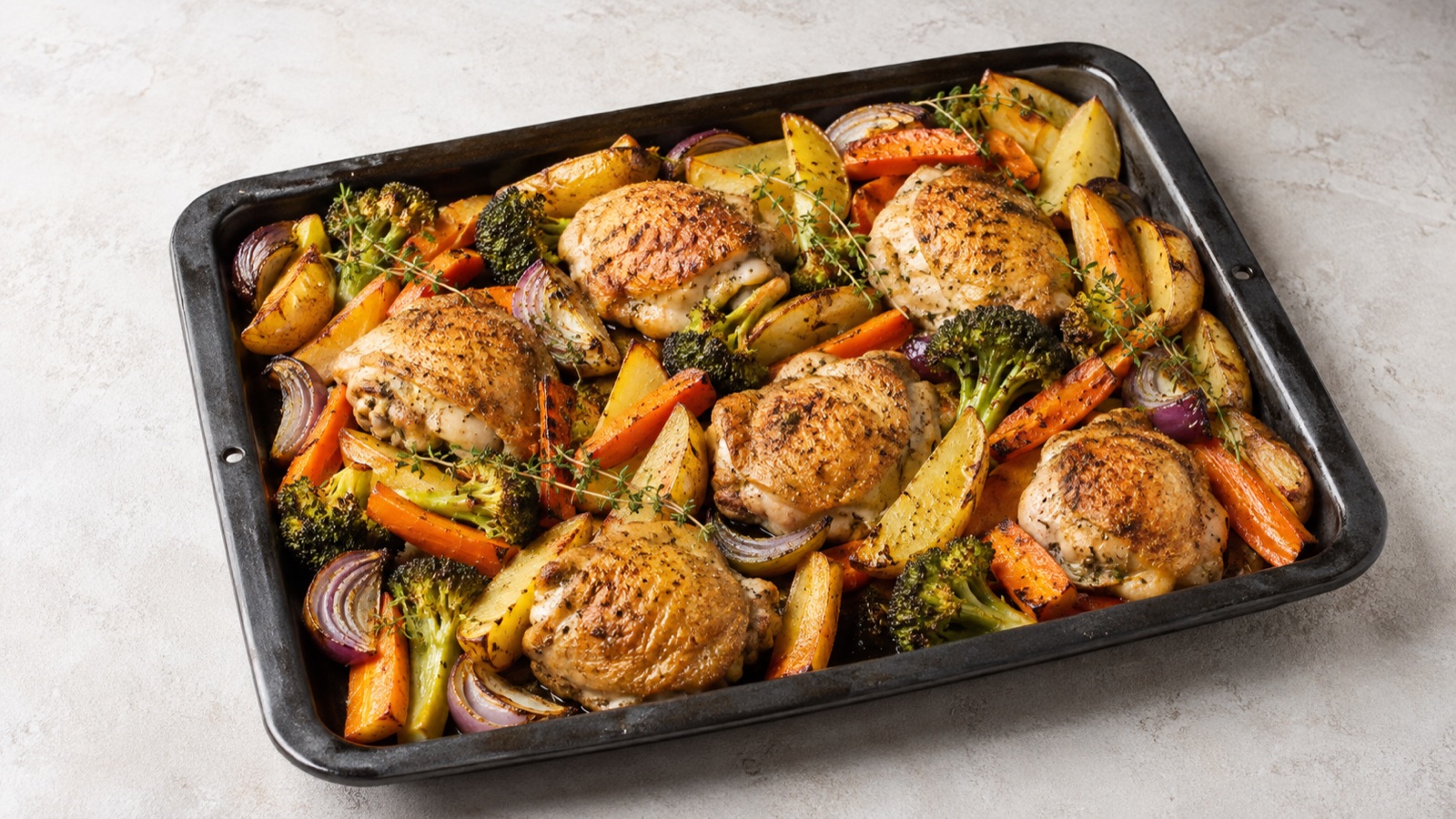
After pre-roasting the side, add the meat and firmer vegetables like onion or pepper. Bone-in chicken thighs need more time than thin turkey or pork slices. Divide ground meat into smaller patties or rolls so it cooks through evenly.
For example, the combination in the recipe for pork slices with apples and onions from one roasting pan. If you want to prepare a side dish at the same time, take inspiration from turkey ćevapčići with roasted potatoes.
3. Finally: quick vegetables, cheese and fresh herbs
Broccoli, zucchini, peas, leafy greens and smaller tomatoes usually don't need the full roasting time. Add them in the last 10–20 minutes depending on size. Grated cheese, yogurt dressings, fresh herbs and crunchy toppings are generally best added at the end so they don't burn or separate.
For baked dishes, work with a cooked or nearly finished side. That's how these work baked pasta with turkey and broccoli i savory rice casserole with chicken.
What oven temperature should you choose?
For most one-pan dinners a practical range is 190–210 °C with top and bottom heat. Convection is usually more intense, so with it you often need a temperature about 10–20 °C lower. Always follow the specific recipe and your oven experience.
- 190 °C: suitable for larger cuts, longer roasting and dishes with cream or cheese sauces.
- 200 °C: a universal starting temperature for meat, potatoes and root vegetables.
- 210 °C: helps smaller pieces brown faster, but requires more frequent checking.
Preheat the oven. A cold start prolongs the time ingredients release moisture and impairs browning. If you use two sheets, swap them between racks halfway through baking; however, a single, not overcrowded sheet usually gives a more even result.
How can you tell when meat is safely cooked?
Surface color or clear juices are not reliable indicators. The most accurate method is an instant-read thermometer inserted into the thickest part of the meat, away from bone. According to the U.S. government site FoodSafety.gov, poultry should reach at least 74 °C, ground meats 71 °C, and whole cuts of pork, beef, veal, or lamb 63 °C followed by a rest of at least three minutes.
If the side dish still needs to roast but the meat has reached a safe temperature, move it to a clean plate and loosely cover it. Return it to the roasting pan only briefly before serving. Never place cooked meat on a plate or board that previously held raw meat.
How do you prevent a dish from becoming watery?
Water mostly comes from an overcrowded pan, wet vegetables, and too much liquid marinade. After washing, dry vegetables, arrange pieces with space between them, and toss oil and seasonings in a bowl before roasting.
Add zucchini, mushrooms, and tomatoes later or cut them into larger pieces. Don’t pour a large amount of sauce over potatoes at the start if you want a crispy surface. For juicier baked dishes, use a deeper dish and expect a soft side in sauce rather than roasted fries.
How to vary a one-pan dish?
You don’t need a new recipe every time. Keep the same principle and change one component:
- Mediterranean variation: chicken, potatoes, bell pepper, red onion, oregano, and lemon.
- Autumn version: pork or turkey, apples, onions, pumpkin and thyme.
- Meatless option: pre-cooked chickpeas, pumpkin, cauliflower and tahini or a yogurt dip added on the plate.
- Baked version: cooked pasta or rice, cooked meat, vegetables and a smaller amount of cheese.
When the family wants more familiar flavors, try baked tortillas with ground meat, beans and cheese. A meatless base can be oven-baked lentil patties, to which you add seasonal vegetables to the other half of the tray.
What are the most common mistakes?
Cut everything to the same size
Same size doesn't mean the same time. Dense potatoes need smaller pieces than peppers or zucchini. Adjust the size to match each ingredient’s roasting speed.
The roasting pan is filled to the brim
An overcrowded tray traps steam. Use a larger pan, two trays, or make a smaller batch. Space is as important as temperature for a browned surface.
Everything is poured over with marinade
Excess liquid prevents browning and can burn sugar or honey before the meat cooks through. Apply a thick or sweet glaze in the last third of roasting.
Doneness of meat is estimated by sight
The crust can be dark while the center hasn't reached a safe temperature; other times the meat dries out unnecessarily. A thermometer is faster and more accurate than extra minutes “just to be sure.”
How to store leftovers for the next day?
Divide leftovers into shallow sealed containers and refrigerate no later than two hours after cooking. A large hot pan cools unevenly, so first portion the food into smaller containers. In the fridge, keep sauce or cold dips separate if they would ruin the food’s texture when reheated.
When reheating, heat the portion through; FoodSafety.gov recommends 74 °C for leftovers. Crispy potatoes and vegetables recover better in the oven or air fryer than in the microwave. Do not keep food for the next day if it sat at room temperature for an extended time.
What's the simplest finishing procedure?
- Preheat the oven and prepare a baking sheet large enough.
- Cut firm sides into smaller pieces and, if needed, par-bake them for 10–20 minutes.
- Add the meat and firmer vegetables in a single layer.
- Add quick-cooking vegetables, cheese, and herbs only at the end.
- Check meat doneness with a thermometer and cool leftovers promptly.
One-pan meals are practical mainly because the same method works for many family dinners. What matters most is not the exact ingredient list but their order, size, and the actual internal temperature of the meat. You can then easily plan the next week’s meals using this guide. how to plan a family menu without stress.